If I died tomorrow I would be worth negative $90,000 (CDN) in various forms of student debt. I call it the Rick Waugh diet.
And to answer your question: "No I don't know what I want to do with my life. But thank you for meeting me at Starbucks and buying me a coffee; for social etiquette purposes I ordered drip coffee because I didn't want to make you pay $5 for a latte."
Every year a straight friend and I usually bet on SuperBowl bet. The lead up to the bet usually requires me to spend a good 30 minutes "boning" up on teams, quarterbacks, and tight-ends (ED: that is more than enough homo-erotic lingo for one paragraph).
But this year – in deciding which team to support I have decided to create an evaluative framework from which to analyze available data before making an informed decision as to which franchise I will be cheering for on Superbowl Sunday.
Both teams, the New England Patriots and NY Giants (which for the unenlightened are different from the San Francisco Giants) were evaluated over 5 categories; each categorywas assigned a weighted average and a corresponding number of points for a total mark out of 100.
The categories are:
1)Hottie
Matrix (50 Points) – attractiveness of the team. Points are awarded as
follows: 10 points for each teammate I would "bone" with a 10 point bonus
for overall team bonability. The maximum marks given are 50+10.
2)Pop-culture reverence (10 Points) – where does the team sit in pop culture? What is the impact of each team on pop culture?
3)LGBT equality stance (30 Points) – Support of players, owners and staff towards LGBT equality
4)Political
relevance (5 Points)- an outgrowth of LGBT
equality stance each team
will be marked for their commitment to life, liberty and the pursuit of
happiness
5)Philanthropic support (5 Points) – What is the teams philanthropic involvement
Point Spread:
1)Hottie Matrix (Out of 50):
Obviously
judging only via physical appearance Tom Brady has almost every other
NFL player beat. The Giants make a rousing attempt of attractiveness
with their Tight End (no pun intended) Jake Ballard who is decently
attractive; however, the one-two punch of Brady and Patriots Tight End
(who knew?) Rob Gronkowski would imply that overall – the Patriots put
the F in JILFs (Jocks I’d Like to…).
Patriots: 20+10 = 30
Giants: 10
2)Pop-Culture Reverence
By
dating a supermodel and having adorably cute children it appears as if
that Brady has this one locked down. The Giants get points for the
Manning family factor, but Peyton being the more beloved of the brothers
doesn’t really help.
Patriots: 8
Giants: 5
3)LGBT Equality Stance (Out of 30)
This is an interesting category:
-Both
teams play in gay-friendly states where LGBT marriage is legal –
Massachusetts and New York (well New Jersey but…) +5 to both
-Owners – both owners have been very friendly to gay fans:
oSteve Tisch made a marriage equality commercial during last year’s debate in New York: +10
oBob
Kraft is a known supporter of marriage equality and the New England
Patriots who became the very first NFL team to become a sponsor of GAY
BOWL:+5
-Players:
oformer Giant Michael Strahan made a LGBT equality video for NY State Marriage equality +10
oBrett Lockett, of the Patriots, made a NOH8 advertisement+5
Giants: 25
Patriots: 15
4)Political Relevance: Both Robert Kraft and Jonathan Tisch have donated $5,000 to Obama. I’m calling this a draw.
Patriots: 5
Giants: 5
5)Philanthropic
pursuits: before she died Myra Kraft was known to have helped give away
$100 million of the Kraft family money. While the Tisch’s have endowed
more then their share of New York institutions. The tip of the hat
here goes to Giants head coach: Tom Coughlin.
Patriots: 4 Giants : 5
TOTAL:
Patriots: 63
Giants: 40
In
conclusion – while the giants have scored highly in some areas of this
evaluative framework – the powerful combination of Tom Brady and his
affiliation with Giselle are too much for the Giants. While the giants
are strong in certain areas of this framework – the top performanceof
the patriots in all areas clearly overwhelms areas where the Giants have
strongholds.
My extra firm (and I do mean firm) support is with the Tom Brady and the Patriots.
Gosh darn it, it’s almost the end of January, and I’ve yet to use the discounted gym membership I bought from WagJag on January 1st.
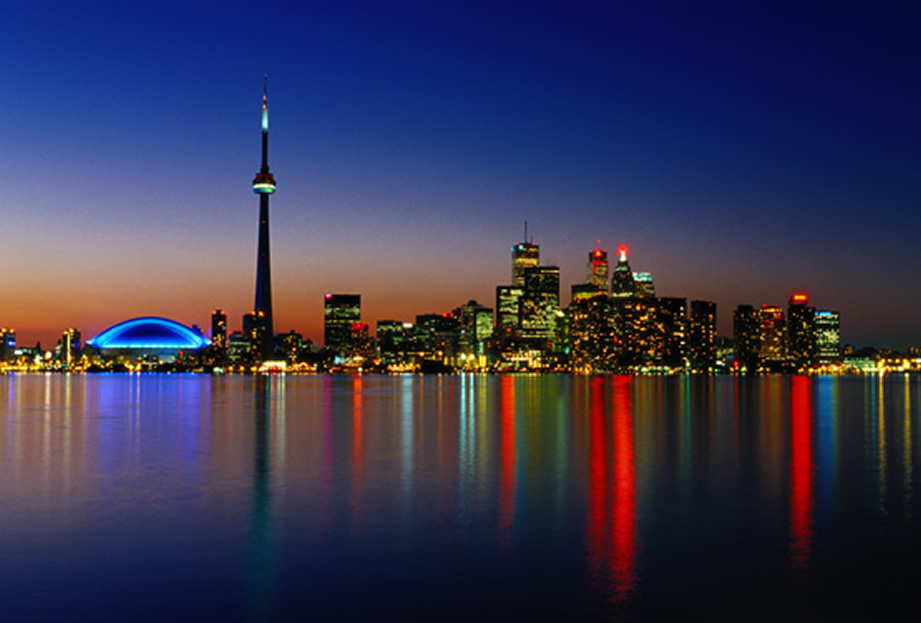
There goes yet another New Years resolution recycled into the dustbin of yesterday’s self delusion. While the advent of the cruelest month, February, may mock us mere mortals for having failed on our path to self betterment, there is indeed time for the collective in all of us, we - the polis of the great megalopolis of Toronto, to make some community minded resolutions for 2012.
Dear Torontonians: it is time to embrace the fact that Toronto is ugly. But ugly is ok.
Like sands through the hourglass so are the columns, which neurotically lament whether or not our fair city is “good” enough to be considered a major world metropolis. These writers nit-pick at Toronto’s ennui, using it as conclusive proof that our fair burg is nothing more than the urban version of an early Spice Girls hit (i.e. a Wannabe).
This tired thesis, by my count a variant on said narrative, is published annually by at least one of our city’s major publications, and has become a paint-by-numbers tome on whether or not Toronto is World Class™. The definition of World Class is of course, elusive, yet the recurring conclusion is that Toronto is sort of like Lana Del Rey: not yet ready for prime time.
Toronto’s urban incompleteness is confirmed by a litany of things believed to be missing in our lakeside burg. The presumption is that once we acquire such “things” Tarawno will finally become something. This argument is, of course, a logical fallacy, but still the list is made: Toronto needs an aquarium! More subway lines! A casino! A waterfront! Things! Stuff!
While some of these needs may be necessary, lord knows the city is in desperate need of more subway lines, the train (pun intended) of thought is off. When Metrolinx finally cuts the ribbon on the oft debated, long awaited, Union-Pearson Air Link, will we, as good Torontonians, suddenly wake-up the next day and realize: this is our moment?
World Classiness does not choo choo choose Toronto simply because we connected Pearson Airport to our Financial District.
Torontonians are also to blame for this insipid shame spiral. Toronto is like the pretty girl next door who used to be fat, and therefore, we must now constantly remind everyone about how cool (and skinny) we’ve become. Thus, it seems that our World Class glass is never neither half full, nor half empty. Our civic boosterism rears its head as if to overcompensate for the above neurosis. Didn’t ya know that Toronto gifted the world the second most important film festival in the world? We also have the greatest music scene in the world, says us! We also had the world’s tallest freestanding structure, once!
Toronto’s tendency to self-aggrandize, unnecessarily, is unbecoming of a large city and more akin to a small town signpost that announces: “Welcome to Middle American Town, Ohio, Birthplace of Forgotten US Senate from the Reconstructionist Era. Population: 2500.”
Toronto, we’re better than that.
Of course combined with grande inferiority complex is the sad reality that Toronto really only blows its wad when something from out of town finally graces us with their presence.
Dear Toronto: Do you know who else has both a Ritz Carlton? St. Louis. According to David Whittacker, CEO of Tourism Toronto, Toronto before the Ritz must have been a nasty and boorish place, pre-cambrian even: “Having a Ritz-Carlton here speaks volumes about the destination Toronto has evolved into. It adds to the visitor experience, and that extends beyond the hotel walls.”
The unfortunate paranoia that Toronto’s chattering class has about stuff too often leads the city saddled with poorly-advised legacy projects which speak to our ill begotten obsession with trying to prove that indeed our dick is bigger than you think. Rogers Centre, ne SkyDome, anyone?
But 2012 is a new year Toronto. And in the year of the Mayan sunset, rather than lamenting the Toronto that we don’t have, let us celebrate the Toronto that we do have.
Perhaps the Toronto that we need to embrace is the city that was most eloquently defined by LA journalist James Rojas, who said the following: “there's a sort of less-than-manicured quality to the whole thing… the city ends up feeling gloriously messy…The city's messiness and realness stands in refreshing contrast to oft-cited beacons of “smart growth” and good urban design, such as San Francisco and Boston, where the perfection of the built form has almost transformed these cities into museums.”
In TIFF parlance, Toronto is like an old Hollywood actress who has refused plastic surgery. And really what type of city do you actually want to live in: Demi Moore Ville, a place whose plastic perfection belies its age and probably its inner insecurities (being married to a chronic philanderer decades younger would do that), or Susan Sarandon-Land, the type of place that may have a couple of laugh lines, but at least it can make proper facial expressions, date younger men AND singlehandedly revive table tennis?
Can Toronto, which is too often portrayed as neurotically self-absorbed and insecure, learn to realize that its greatest asset is actually its lived-in ugliness? If we Torontonians, both media and citizenry alike, can learn to truly embrace our own patina of ugliness, then we may not be as insecure as our naval-gazing, self-loathing chorus would like us to believe.
Cities, after all, are not made to be perfect, nor are they made by perfection.
You want a marketing slogan: “Toronto. Get Real.”
Over the past month or so I’ve become mildly fascinated with a gay American soldier who has documented the process of his coming out in a series of fairly emotionally raw YouTube videos. His channel and twitter feeds are titled: AreYouSuprised, a rhetorical question perhaps on the subjects perceived masculinity.
When the soldier, now known as Randy, started making his videos he pointed his iPhone camera at his pectoral muscles downwards. This framing had a dual purpose: they maintained the soldier’s anonymity (the video’s first appeared in April months before the official repeal of Don't Ask Don't Tell) while also highlighting his sculpted chest.
This duality was probably at the heart of Randy’s success as an Internet viral hit (4 million views and counting): his videos targeted an intellectual audience that was empathetic to his lonely plight while titillating the rest of us with twitpics of his six-pack.
The dichotomous nature of the Soliders efforts piqued my own internal fasciation – was AreYouSurprised an entirely wholesome effort, or was it some sort of cleverly concocted social media campaign concocted by GLAAD or Human Rights Campaign to bring attention to gay issues preceding the repeal of DADT?
The soldier finally revealed his face in a dramatic denouement (much to the glee of his many fans whom had been left salivating over his sculpted physic) on September 20th, the day DADT was formally repealed, videotaping himself telling his father over the phone that he was gay.
Was the entire series emotionally honest? It was; especially, to anyone who ahs gone through the routine of telling their best friend that they were gay, and then wrestling up enough courage to come out to other friends, and then finally family. This was what made Randy’s “live” statement to his father that he was gay so heartfelt both for the subject and the viewer. Was there a dry eye in the house when Randy’s father told him that he loved him no matter what? Probably anyone but Maggie Gallagher and Michelle Bachman passed the tissue.
That being said - was the whole series also kind of creepy? Yes it was; since when did it become perfectly normal to watch a stranger go through his coming out process on YouTube? What makes this even creepier is how normalized this all seems in a post “It Gets Better World”.
And this, this is where a problem emerges. Sharing, which was formerly caring, or whatever the saying was that we all learned in kindergarten, has been completely redefined in the twenty first century. Sharing is no longer caring. Sharing is now showing and sharing is also now telling.
Now… of course, who am I to really talk about any of this? I tweet, blog and status update with the best of them. And to a point I do it because I’m bored and because I like to express myself and because I’ve been told I’m a mildly witty writer so I figure use whatever God-given talents I have before I’m carted off to the loony bin.
And in some ways, as someone who loves to write, but has made a sum total of $600 from various writing pursuits, I write and publish on free blogs, like the Huffington Post, for the joy of it. I am part of Russell Smith’s complaint; I have never had an editor parse my work nor have I had to report on things I don’t like to talk about; I can excuse myself from the dregs of journalism because I am a blogger. I am not, nor ever have I been a journalist… I just play one on the interweb.
And so I understand Smith’s concern with the matter at hand; however, in my generational defense, what Smith may have missed, however, is that young - people and I’ll include myself in that lot - don’t view sharing as a form of creating intellectual capital. We share because its what we’ve been trained to do. We share because there is a button on Facebook that says: share. In our constantly connected world, sharing is just another click on our smartphone.
No longer do we write things down in our diary, or even do we write long, expressive emails to our best friend as we did in the late nineties; remember, the halcyon, days when you received only 1 email a day and it was sort of exciting to log into Hotmail? We make YouTube videos because we want to and as Smith notes we don’t expect to be paid for anything because we don’t really view any of this as art. Sharing is no longer creating (in an arts centric sort of way); we share because we like to share. And should it “go viral”, allowing its creator to reap some sort of financial reward (Obviously Rebecca Black is the most obvious example of this)… that is just financial gravy on top of the emotional gratification of sharing. Show now, reap value later, if at all.
But if we HAVE become a society of constant shares, then the line between what is intellectual output and what is just a fart (to be lewd) is forever blurred. And therefore I do understand Smiths' concern - if everything becomes a simple share (I'll just publish my newest photo album on Facebook), then we do unfortunately de-legitimize the creation of real creative content. And that... my friends is a problem.
NB: A stupidly long essay on life… ie I need an editor
I was looking at photos of a friend’s recent Euro-trip the other day – the type of overzealous photos taken from a train station when you’re 23 and backpacking through Europe and even though you’re covered in sweat, and you’ve worn the same outfit 3 days in a row, but you’re face is covered with the biggest shit-eating grin because you partied until 4 am and somehow made it to the Budapest train station to catch the early train to Vienna…
Back here in Canada a group of friends and I were chatting about said photo album over brunch. Soon we began to chat about our various Euro Trips; one of us recounted a tale of having sex in the bathroom of a hostel in Madrid (not my story) and another reminded us about the time someone had barfed on them at a hostel in Greece. As brunch ended, we realized, with some lament, that those days – the days of Europe being a haze of 32 person hostel rooms, cheap beer, and vodka shooters – had ended. Somehow, somewhere, silently we had aged out of the fun.
I think a lot about the difference between being 23 and being 27 (or 22 and 28) these days. Those five or six years of seem vast to me in terms of maturity but I can’t tell if it is haughty of me to think that it is those 5 years specifically which constitutes maturation or if it is 5 years in general.
When I tell my 23 year-old friends that 23 is worlds away from 28 most argue, “But we’re practically the same age.”
I wish it were true. I also wonder if 33 will feel totally different from 28 (if a 33 year old is reading this and laughing at me - heads up!); or rather, if, at 25 or 26, you somehow cross the Rubicon from being a sorta-kinda-adult into the murky middle of real adulthood which suddenly means mortgage payments, car payments and private school payments that spread before you like a never ending roadmap to Freedom 65.
I’ve only recently concluded that adulthood is measured by the monthly outflow of your checking account; the more monthly payments you have, the more of an adult you actually are. And if I’m being totally honest being a “real” adult with its litany of monthly payments sorta kinda sucks.
Similarly, a friend of mine was recently at a baby shower, listening to her female friends chat about Egyptian cotton thread counts, when she lost her $hit and literally screamed at the top of her lungs: “guys I don’t fucking care.” Ennui aside, she was in the minority.
To top the banality of it all, being a real adult features such familial injustices as the following: “If you can afford to a Power Ball ticket,” my mother told me the other day, “I don’t think your father and I should be subsidizing your High Holiday ticket at synagogue.” She wasn’t necessarily wrong, but did I really want to spend my hard-earned shekels on Beth Shalom?
But what is most noticeable about transitioning into real-adulthood, besides the aforementioned increase in monthly payments, is the fact that suddenly you don’t just have one best friend. Suddenly your best friend now has a girlfriend or a boyfriend. Even acquaintances start showing up to parties with someone. “Can I bring Phil?” “Do you mind if I bring this girl I’m seeing, its getting kind of serious.” And low and behold these other people aren’t just booty calls or interstitial things: “we’re just dating; its not serious so please don’t friend them on Facebook,” rather, what is happening now eventually winds up with a close-up shot of “the Rock” on Facebook. The Rock Shot and Rock Watch is a great past time for those with a couple of idle moments. And for the record I’m not judging that photo nor the desire to show off the diamond – all parties, from groom to bride to parents, have worked hard for “the Rock”.
Sometimes said photo is pre-dated by an email: “heads up, xyz and I got engaged last night, I’m telling you before we announce it on Facebook.”
My response to such an email is three-pronged:
Initial reaction: 1) Happiness or Anger (depending on my feelings toward the significant other, now fiancé)
Subsequently, I send this email (often before I even respond to my friend): 2) Hey Lucy (a personal shopper at Tiffany’s whom I met once two years ago and whose contact information I put in my phone even though I haven’t seen her since) - I have another wedding. My billing information should be on file.
Lastly, I respond to my friend: 3) OMG!! OMG!!! - I’m so happy for you guys! (I say that even if I’m not and just a differing about of exclamation marks)
After the most recent engagement of a friend I came home and watched that old Sex and the City episode (A Women's Right to Shoes) where Carrie registers for a pair of Manolo Blahniks because she’s fed up with having to spend hundreds of dollars on her friends’ baby showers, weddings, engagement parties and the like. I finally get it. Why is no one offering to buy me a KitchenAid stand mixer? [FYI – I’d like one in the Caviar colour.]
Even friends of mine who swore that they would never get married, tuck their tails between their legs and learn the most important words any bride must know: Monogramed Crane Thank You Cards.
When I was 24, for example, I worked with two lovely women in their early thirties. Neither was married, and neither had children.
“You’ll both wind up pregnant and married,” I told them about a month into our friendship.
“Never!” They argued. “We don’t want kids!” They were modern gals “We don’t need to get married.” Fast forward four years to our annual Christmas reunion lunch at Fresh on Bloor Street, wherein they whipped off their parka’s to highlight baby bumps… “We’re both pregnant!” They gleefully told me.
Babies, much like adulthood, seems to creep up on us, replacing debaucherous nights at the Pink Palace in Corfu, Greece, with conversations about car mileage and the hassle of having to buy two car seats for two separate cars.
What’s interesting of course is that for the gays, although perhaps this will change, what with the increasing acceptance of gay marriage and gay adoption, our semi-adulthood seems somewhat prolonged; at least compared to our straight friends who barrel past 28 and run headfirst into their thirties.
Of my gay friends who are in somewhat long-term relationships… not one is talking about marriage. Comparatively, I already have four straight weddings scheduled for 2012 (this is before the Holiday Engagement rush so I figure I could have 8 weddings for 2012). In fact most of my gay friends aren’t even in relationships. I was up at a friend’s cottage over the past weekend with 5 other single, professional gay dudes who were in various stages of looking for love. We spent the weekend oscillating between jokingly going on Grindr to check out the local talent and lamenting our recent run of bad dates. Sure enough the 6 of us found ourselves on the following Thursday drunkenly stumbling around Woody’s judging the weekly best chest contest. That’s what singledom allows I guess.
In some ways it seems as if we’re sort of caught between “the Rock” and a gay place.
Gay marriage and the fight for equality was in some ways meant to be a great equalizer. Gays can be just like the breeders. And yet… not to rely on stereotypes sometimes we aren’t. First of all there are biological differences between gay couples and straight ones that seem to preclude a rush to the alter. As Marissa Tomei infamously noted in My Cousin Vinny… there is such a thing as a biological clock for the gay man, which in Marissa’s case was “ticking like this”.
And perhaps more than biology gay men are free from the societal pressure that constrains a lot of my single female friends. As one boyfriend noted – and I’m paraphrasing - “Upper Middle Class Jewish Toronto forces this same goal: get married and have babies before you’re 30.” And in a way he was right. There is the unspoken “plan” that seems to take root. Suddenly you run into more and more people from elementary school pushing strollers and as you exchange pleasantries you wonder “how old were my parents on the first day of school?” And then there’s this total mind-fuck because you realize you’re about as old as your first memory of your parents. And if that doesn’t require a shot of vodka then I don’t know what does.
But ya see.. gay men just aren’t bound to the same “Plan” (get married and have babies before 30). First of all biology complicates our lives and any sort of foray into parenthood requires adoption and surrogacy which makes the entire thing a bit more complicated then stopping birth control. And of course society doesn’t expect us to follow the “Plan”; if we do, we do so much later on in life.
There’s a great blog I read called the Domestic Daddy. It’s about two Manhattanite men who have sired a child. The DD (who actually is a daddy in the gay sense of the word) writes about his life raising Julia and decorating their house in the Hamptons and loft in Chelsea. One of the blog posts started with: “Strolling through the girls section of the little J.Crew store in Southampton which we do often.” The Domestic Daddy had me at J. Crew. And in fact there is something resoundingly twee about the Domestic Daddy’s blog. It’s a rather adorable family blog about a parent taking time off from work to raise his child. The slant of course is that the parents are also gay men.
As per most things in life – I spent an afternoon Googling the Domestic Daddy on the internet and realized he was in his late forties. His partner, in his fifties. They were indeed Domestic Daddy’s… but they weren’t like my twenty-something friends who got married and had babies when they were 30. They had settled sure, but they had done so at a much later time in life.
And that’s the thing really… if 28 is somehow suddenly adulthood – and the seeming mass of your adult years stretches before you, tempered by marriage and the birth of children – gays are given the luxury of seemingly having a longer adolescence. The true question – is what do you put between that Rock and the gay place?
Because this article appeared in print four years ago... I feel like its time to go all retro styles and reprint. (And I guess the National Post still owns the rights to this.. but like... simmer down) The edited and published version is available here!
My Two Villages
Hilary Rodham Clinton infamously published a book a couple of years ago entitled “It Takes a Village.” Lifted from the African proverb, “It Takes a Village to raise a child” Clinton espoused her unique vision about how to parent a gawky red head in America (loves ya Chelsea!).
The Village she was talking about, I suspect was NOT Forest Hill. Here it takes one immigrant nanny to raise a child, yet an entire Village to corrupt said child into a bitchy sixteen year-old wearing $90.00 sweatpants. Sigh. [Sidenote: how much do you love the fact that Old School Roots Sweatpants are back?]
Toronto, in true Clinton esque fashion, is however a city defined by its villages, neighborhoods and nabes. At the recent Toronto City Summit, the health of our neighborhoods was on par with discussions on transportation, economy and even topic du jour, the environment. In fact “Strong Neighbourhoods, Stronger Toronto Region” was one of the most dynamic and provocative session of the summit; more attendees wanted to talk about Toronto neighborhoods with Frances Laskin then those who humored Mayor Miller’s frenetic One Cent Now campaign.
In Toronto – communities and villages represent a rather simplistic, yet provocative, version of identity. Neighborhoods are instant generalized value judgments. Annex = hippie. Rosedale = WASP establishment. This list could go on and on and like any sweeping generalization there are I’m sure exceptions to the rule; that being said you can bet your Holt Renfrew Amex card that the McGregor Smith’s outnumber the Singh’s on Binscarth Avenue, Rosedale.
As a gay and Jewish man who grew up in the Faux Hill my community based identity should be pretty clear. I oscillate between two of the city’s most infamous villages: the Gay Village at Church & Wellesley is where I indulge in my love of non-kosher meat, and in the Faux Hill Village at Spadina-Lonsdale, I can wolf down a chopped egg salad sandwich from What a Bagel. Sometimes it’s hard to choose.
In funneling between these two villages I’ve realized however that I’ve never felt particularly comfortable in either. Sometimes when I go to Woody’s [That would be a gay bar for those not in know, because yes – gays love phallic gay bar names] I feel like a 14 year-old twink awkwardly venturing downtown for his first taste of homosexuals. A friend looked at me recently and said, “you really don’t like either of your identities, do you?” I stonewalled for a second before looking at him and argued, “Its not that I reject who I am,” I love being gay, and like some aspects of being Jewish, “I just reject the popular connotations of my identities.” What I meant, when I took some time to actually examine my use large, multi-syllabic words, was that I hated the public connotations of my two villages. As a happy fag and embittered Jew I don’t particularly associate or feel represented by the popular connotations of my identity groups, which in Toronto is best personified by the their respective Villages.
When I went to Puerta Vallarta over Christmas (yes - that would have been a vacation I took WITH my parents) I ended up in a hotel about a stones throw away from the Puerta Vallarta gay village. Same rainbow flags, same sex shop, phallic based bar names – and same sense of not belonging. I don’t particularly like the popularized image of the gay village for some reason – perhaps best represented by an inverse graph to the number of times I’ve been asked to “join me and my boyfriend for some hot three way action.” I’m more of a love the dick, hate the Village kinda guy. As if to exacerbate my views on gay villages, one relatively infamous Canadian fag I know had this to say about PV, “I can’t believe you went there with your folks – there are so many men there; Martin [boyfriend of ten years] really loves the Latin men.” Did you just vomit in your mouth, because I did. And as for the other village in my life – Faux Hill, my distaste with these parts has an entire blog devoted to its Lululemon clad ass so really nothing more to say there.
Too often I get accused of some form of self loathe. Gay friends accuse me of being a bad gay, Jews accuse me of being a self-loathing Philip Roth lite; and maybe they’re all correct in their assumption. Maybe I should accept who I am and get myself a nice set of Burberry earmuffs. Don’t worry – I’m not going to. I realize the problem though: at base we all love to belong. We all love to be amongst peers who we recognize and who we can borrow from a Coach purse now and again. For example, there is even a group for people ‘like myself’, Jewish-Fags, which attempts to bridge the cultural gap between uptown middle class Judaism and downtown hardcore faggotry. One could argue even that the success of Toronto is inherently tied to its Village structure and the sense of belonging it imbues. Residents feel an intense sort of pride in the common sense of identity that their neighborhood provides.
The bigger problem though beyond this sense of belonging, or in my case, lack there of is that the Village creates a sort of identity that sometimes is often more stereotypical then real. I.E. all gay men aren’t obnoxious pigs, no matter how many times the bisexual tells me that over the phone [that is called self-loathe sweetie] and no matter how many times I leave a gay bar shaking my head in revulsion. And not all Village residents are Faux Hillary’s – remember Bold doesn’t own anything from Tiffany’s.
My friend Kitty often introduces me as Jewish Jon to her friends. When I came out we discussed adding the additional adjective before deciding that one derogatory nickname was enough. The rather intelligent joke of course is that by calling me Jewish Jon, she was in fact making fun of that particularly stereotype, that Village mentality if you will, wherein cultural identity is trump. And more then that, cultural identity is a broad stereotype that everyone gets. “Oh you’re Jewish?” Her friends would say. “I love latke’s! I love hanging out in the Forest Hill Village!” Jewish Jon was a motif for the fact that for the most part the people that we associate with are happy to loudly and proudly declare their minority status. I’m gay! I’m Jewish! I’m Asian! I blame the whole multi-cultural mosaic concept; either way, welcome to Village Pride baby.


 Obviously
judging only via physical appearance Tom Brady has almost every other
NFL player beat. The Giants make a rousing attempt of attractiveness
with their Tight End (no pun intended) Jake Ballard who is decently
attractive; however, the one-two punch of Brady and Patriots Tight End
(who knew?) Rob Gronkowski would imply that overall – the Patriots put
the F in JILFs (Jocks I’d Like to…).
Obviously
judging only via physical appearance Tom Brady has almost every other
NFL player beat. The Giants make a rousing attempt of attractiveness
with their Tight End (no pun intended) Jake Ballard who is decently
attractive; however, the one-two punch of Brady and Patriots Tight End
(who knew?) Rob Gronkowski would imply that overall – the Patriots put
the F in JILFs (Jocks I’d Like to…). 2) Pop-Culture Reverence